Showing posts with label Contemporary Fiction. Show all posts

Wednesday, August 5, 2026

Contemporary Fiction Spotlight: How Do You Live Without Love? by Anthony Bradshaw

New Covenant needs more than a pastor who can fill a pulpit. Its bills are mounting, its leadership is divided, and its place in the community has become uncertain. Wesley Aames arrives carrying losses of his own, which makes his assignment less a conventional rescue mission than a difficult test of what care looks like when neither the caregiver nor the institution is whole.


How Do You Live Without Love? places grief, congregational conflict, public judgment, and found family within the everyday work of a struggling Appalachian church. Wesley counsels teenagers, answers crisis calls, tends the grounds, and stands beside people whose pain has become public spectacle. The result is a story interested not only in belief, but in the quieter question of whether mercy can be practiced when certainty has disappeared.


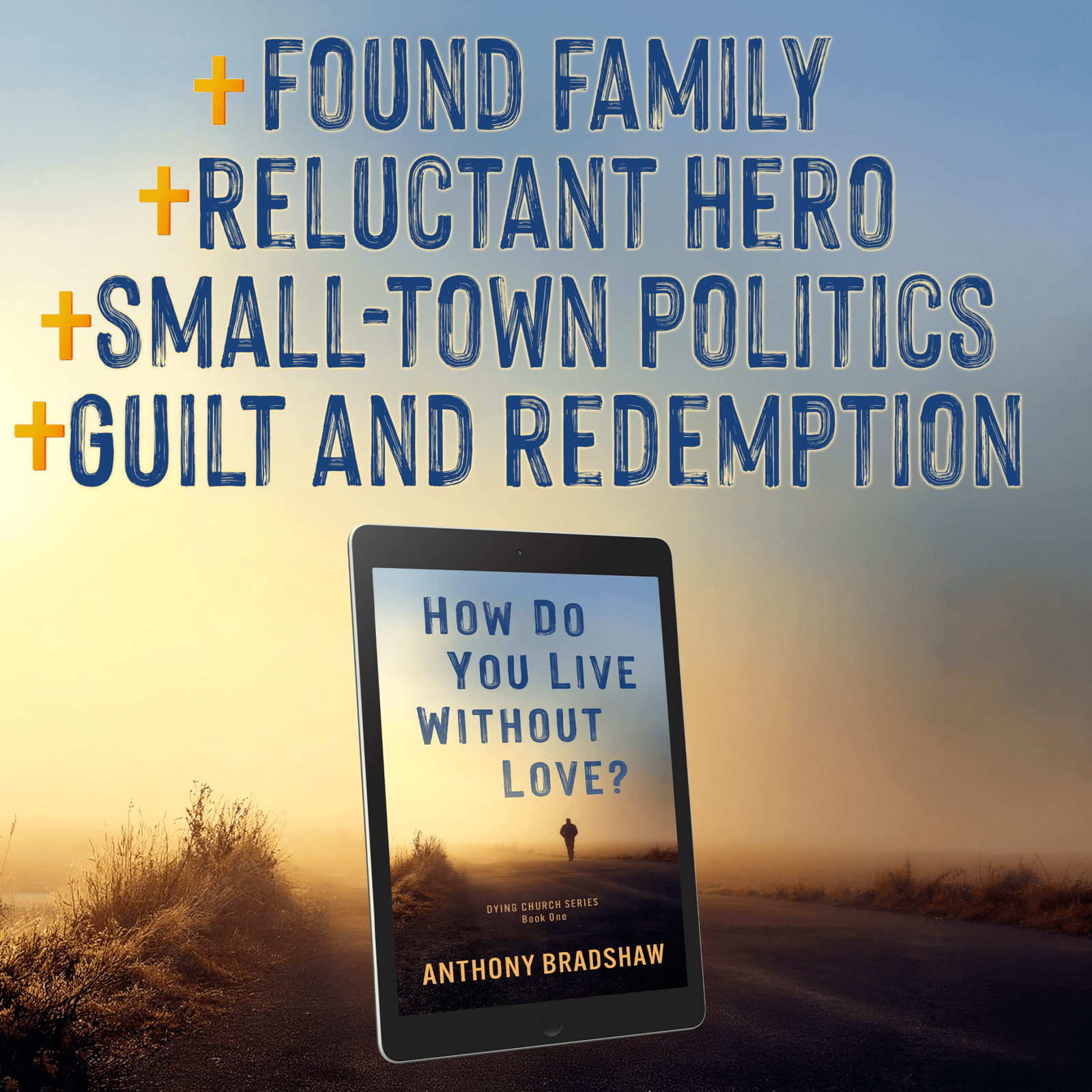
How Do You Live Without Love?

The Dying Church Series Book 1

by Anthony Bradshaw

Genre: Contemporary Fiction, Found Family

༺ ABOUT THE BOOK ༻


Wesley Aames shows up to New Covenant as a man who has already lost everything—wife, daughter, and the will to keep going. Hired to revive a sleepy Appalachian church, he finds a congregation on life support: dwindling funds, fractious trustees, and a choir director who distrusts the new pastor from day one.


When a teenager dies by suicide and her mother's humiliation explodes online, Rosa Lee becomes a magnet for cameras and contempt. Wesley, barely a pastor and twice a stranger to mercy, steps into the storm—counseling teens, calming old ladies, cutting the grass, answering crisis hotline calls—trying to make faith look like rescue instead of rhetoric.


As the church's finances and patience run out, a vote looms: keep the earnest, flawed pastor or replace him with steadier hands. But when the outside world shows up with microphones and accusations. Wesley's choices become literal life or death. Can a man who still blames himself for his family's deaths save strangers—and in doing so, finally forgive himself? This is a story about grief, messy grace, and the small acts that sometimes hold a town together.

༺ WHY READ THIS BOOK ༻


Wesley’s work at New Covenant gives the novel an unusual measure of faith: not polished sermons or easy answers, but whether he will answer the telephone, sit with a frightened teenager, defend a woman being condemned in public, or feed a damaged stray dog before reporting to work. Those ordinary decisions allow the story to examine compassion as conduct rather than rhetoric.


The church itself is more than a backdrop. Its dwindling funds, suspicious trustees, internal rivalries, and approaching leadership vote create a second crisis alongside Wesley’s private grief. His effort to help the congregation survive therefore becomes inseparable from his attempt to understand whether a life fractured by loss can still be useful to other people.


The Asheville setting and the pressure of a media-fueled scandal widen the conflict beyond one pastor’s recovery. Private suffering becomes public material, and Wesley must decide what loyalty and mercy require when cameras, accusations, and communal fear begin shaping the story.
༺ read an EXCERPT ༻


Wesley walked today rather than ran. Too tired to run, he needed time for introspection, processing, and perhaps a re-balancing of his inner psyche. He had always prided himself on his self-control and equilibrium. Rarely did he lose his temper or act without thought. Wesley started the play list that featured Jan


Then Wesley saw him. The ugliest, mangiest looking dog Wesley ever. The few spots where he had hair were brown. One leg was missing. One ear looked chewed off and the way he cocked his head made Wesley think the dog was blind in one eye. “Hey there,” Wesley said. The dog took a step back. Wesley kneeled on the damp ground. “Hey boy.”


The dog held his ground this time. He cocked his head and watched Wesley with his good eye. Using the universal and timeless signal between dogs and the people they owned everywhere, Wesley clucked his tongue. The dog’s one good ear twitched. A little.


Turning around, Wesley took a few steps away from the three-legged, one-eyed, one-eared dog and whistled. The dog barked. Wesley kept walking. The dog barked again. Twice. Louder this time. Wesley turned back and looked at the dog. “Come on, if you want to,” said Wesley with a smile. The dog barked at Wesley, and then he trotted to where Wesley stood, looked up at him and barked. Man and dog walked the streets of Asheville.


Back at the parsonage, Wesley knew he would be late for work, but he did not care. The dog needed to eat.


“As funny as it would be to watch you eat a peanut butter and jelly sandwich, how about I give you corned beef hash? It’s canned. I haven’t had time to make fresh–but I will, I promise. Just for you. Well, and me. I’ll have some of this as well for my breakfast. You won’t care if I heat it or not. So, let’s rough it and eat it straight out of the can. You know, like the cavemen did.” The dog sat back on his one good haunch and waited–like dogs do.


“Here you go, pal.” Wesley spooned half of the can onto a paper plate. “You know, missing a couple body parts like you do, looks like you have stories to tell. You may be the luckiest dog alive.” Wesley kept up a constant stream of chatter to put the dog at ease. The dog barked and moved closer. Wesley took the opportunity, while the dog devoured his food, to check the dog’s collar and tag.


“George.”


The dog stopped eating, backed up, and growled.


Wesley looked at the dog and said it again. “George.”


The dog growled and barked. It was a different bark from any of the earlier barks.


Wesley pointed at the collar and tag. “The tag says your name is George,” reasoned Wesley.


George growled and barked.


Wesley squatted and clicked his tongue. “Come here, boy.”


He placed a slight emphasis on the last word. George wagged his tail and inched close enough to resume eating, which he did.


“George,” said Wesley. “George” backed up a few feet–out of Wesley’s reach. His one good eye darted between Wesley and the half-eaten corned beef hash.


“Come here.” Wesley clicked his tongue.


The dog stared at Wesley for a moment before coming close enough to eat his few remaining bites.


“Well, it looks like you don’t care much for your old name. I bet I can call you anything if I feed you. How about…Lucky?”


Wesley looked over “Lucky’s” three-legged, one-eared, and one-eyed body and just shook his head at the irony of calling this dog “Lucky.” That sealed it. “I wonder if you only have one nostril working?” Wesley laughed. “You oughta see the other dog, huh? Right, Lucky?”


Wesley kneeled and scratched behind the dog’s good ear and repeated his new name — Lucky. Before Wesley left for work, he pulled up the picture of his family on his cell phone and introduced the newest member of his family to the picture of his wife and daughter.


Lucky finished the can of cold corned beef hash and drank water from the empty can.
 

༺ WHO WILL LOVE IT ༻


This novel belongs on the reading lists of those drawn to character-driven stories about grief, community responsibility, and imperfect people attempting useful work. Its church setting will be especially relevant to readers interested in the practical tensions inside a congregation—money, leadership, trust, reputation, and the distance that can develop between a stated mission and daily behavior.


Readers who value found-family fiction may connect with the relationships Wesley forms while trying to rebuild New Covenant. The book may also appeal to those who prefer faith-centered stories that allow doubt, anger, institutional conflict, and personal failure to remain part of the conversation rather than resolving them through simple assurances.


The storyline involving a teenager’s death by suicide and the public humiliation of her mother introduces emotionally difficult material. Readers comfortable with serious contemporary fiction that addresses bereavement, suicide, crisis intervention, and media scrutiny will be best prepared for its subject matter.

༺ ABOUT THE AUTHOR ༻

I've had several "careers." I've taught robotics; been a hospital administrator, served in the National Guard, bussed tables and flipped burgers. Above all else, I am a husband, father, and grand-pere'. I am a native of North Carolina and currently reside near Asheville.

༺ CONNECT WITH THE AUTHOR ༻


Website  •  Facebook  •  Instagram  •  BookBub  •  Amazon  •  Goodreads

༺ BUY THE BOOK ༻


Only .99 cents!

Amazon  •  Apple Books  •  Kobo  •  Bookshop.org  •  Smashwords  •  BookBub

༺ enter the GIVEAWAY ༻

Follow the tour HERE for special content and a giveaway!

Enter the How Do You Live Without Love? Giveaway Here

༺ LAST WORD ༻


How Do You Live Without Love? asks its central question through people and institutions that have already been wounded. Wesley cannot restore his family, erase the congregation’s divisions, or control the public appetite for scandal. What remains within his reach are immediate acts of attention: listening, feeding, answering, defending, and staying present when withdrawal would be easier.


That emphasis gives the novel its clearest identity. The survival of New Covenant and Wesley’s own movement through grief depend less upon a single dramatic revelation than upon a series of choices about whom he will serve and what he will do next. For readers interested in contemporary fiction where community is built through flawed, practical care, Anthony Bradshaw’s opening volume in The Dying Church Series offers a thoughtful place to begin.

༺ JOIN THE CONVERSATION ༻


Be the first to see cover reveals, upcoming releases, exclusive excerpts, author features, and more. Join our growing community of readers and book lovers.


 

➡️ Join Our Newsletter


Wednesday, July 29, 2026

Contemporary Fiction Book Blitz: Strings by Jan Merritt

Strings begins in the eerie stillness of a nearly deserted airport, where two travelers are trying to outrun the uncertainty of an approaching national lockdown. Grace Wheeler is a Southern journalist determined to protect both her health and her precarious career. Robby Song is a Native American rock star returning to northern Minnesota while the music industry pauses around him. Their first conversation—shared over airport coffee, masks, and a misplaced packet of guitar strings—sets an unexpectedly personal story in motion against the upheaval of the pandemic.


Contemporary Fiction

Date Published: November 23, 2025


༺ ABOUT THE BOOK ༻


A pandemic is spreading across the globe. A national lockdown looms in the United States. A Southern journalist sees a chance to protect her health and jumpstart her career by escaping north to a Minnesota wilderness. Feisty and wary of entanglement, she piques the interest of a bored Native American rock star on his way home.


Robby Song’s career may be on hold, but Grace Wheeler is on a mission to build hers. To Robby, she’s an intriguing challenge. To Grace, he’s a distraction she’s not ready to handle. But the brutal Northwoods winter is coming. Grace flees back south . . . to soul-searching isolation and a puzzling middle-of-the-night call.


༺ WHY READ THIS BOOK ༻


The opening situation gives Strings an immediate sense of place and time. Grace and Robby meet in an airport stripped of its usual crowds, commercial noise, and easy anonymity. Surgical masks hide their expressions, flight schedules have become uncertain, and even accepting a cup of coffee requires a new kind of caution. Jan Merritt uses those recognizable details to introduce two people whose lives have been interrupted in very different ways.


Grace approaches the Northwoods as an escape and a professional opportunity, while Robby is heading toward family and an indefinite pause in his music career. Their competing priorities prevent the relationship from beginning as a simple retreat romance. Grace is intent on remaining independent, Robby is intrigued by her resistance, and the approaching Minnesota winter adds another deadline to a connection formed during an already unstable moment.


༺ read an EXCERPT ༻


PART I – THE NORTHWOODS

Chapter 1 – Airports


Empty. No sounds except flight announcements and Covid precautions over the PA as Grace trekked alone through the wide, carpeted corridors, stepped onto the moving walkways, and passed the shuttered kiosks, shops, and restaurants of the Minneapolis airport. The few people she saw, behind counters or scurrying past at safe distances, wore surgical masks, except for one or two who had creative, last-minute coverings . . . red bandannas or black gaiters. The antiseptic smell of hand sanitizer hung in the air, penetrating her mask. If she closed her eyes, she could think she was in a hospital. Her hair probably reeked of the stuff. Of course, her gate was the last one. She shrugged her old, green backpack off and sank into a seat against the wall, leaning her head back and closing her eyes, hoping the flight was still happening. Except for her, the gate area was deserted. Maybe she could drift off.


But it was no good. She couldn’t sleep. She was tired, and the adrenaline had worn off, but she was growing anxious. Maybe she wasn’t as brave or capable as she’d thought. She sat up, pulled the tablet out of her backpack, and began rereading her notes from the last interview she’d done, the one with the middle school English teacher about online classes. She needed to get it written up and into her editor. She could not lose this job, her only income. A seat creaked nearby. She looked up. She hadn’t heard him walk up, but good sign, another passenger. A man was sitting with his head leaned back against the window, eyes closed, long legs stretched in front of him, a guitar case leaning against the next seat with a tan jacket thrown over it. Before long, he sat up, glanced at her over his black mask with tiny gold stars, rose, and walked to the bank of windows at the end of the concourse. He stood there, looking out, a tall, thin man all in black, with a long braid. Quite the silhouette. She looked back at her notes.


“Cozy, huh? A whole airport and just the two of us.”


She jumped. The voice was unexpected . . . and hoarse. He was six feet in front of her. She stared up at him. “I guess that’s one way of looking at it.”


“Well, I try to look for the positive.” He paused and cleared his throat but didn’t turn away. “I’m going in search of coffee. If you’ll keep an eye on my things, I’ll bring you some.”


“I’ll watch them.”


He moved the guitar and jacket to a seat in her row, then straightening, looked at her. “You want coffee or not? You didn’t actually say.”


They studied each other then, the way people do when they’re wearing masks — all eyes. His were dark, almost black, under barely arched eyebrows. They looked at her steadily . . . with a touch of amusement? Hers were brown, with the beginning of a worry wrinkle between her brows. She looked back with a serious expression.


“Sure. Black, one sugar.” She leaned over to get her wallet and noticed her toenails. She had meant to cover the chips with a fresh coat of blue polish. Oh, well.


“I’ll get it.” He walked off.


A red packet was on the carpet below his jacket. She put her tablet down on the little table between her and the next seat, walked over, and picked it up. D’Addario Guitar Strings. She placed it on the worn suede jacket, under the sleeve but visible, and went back to her notes.

************


“I stopped at a hand sanitizer.”


She nearly dropped her tablet this time. “You need a bell!”


“Sorry.” He was in a seat, reaching across his guitar to place her coffee on the little table. “One of my nicknames growing up was Sneak. But you seem a little edgy.”


“Maybe.” She noticed his long, slender fingers and wondered if that was good for playing guitar. Her mother’d always said it helped with playing the piano. She picked up the cup and went to remove one side of her mask, but the loop was tangled in her hair. She put the cup back down. Masks were proving to be a challenge. She’d given up trying to control her hair long ago, but masks weren’t optional. Her hair was dark red, dark enough it was hard to see the red unless she was in the sun. The kind of red hair that’s big and ends up in long twirls unless you comb or brush it which only makes it a bigger, frizzy mess. She tried to free first one side of her mask, then the other, finally getting one, then a sip of coffee. She looked his way. He was watching her. “I hadn’t realized how much I needed this. Thanks.”


“You have a lot of hair.” He turned away, removed his mask with one hand, took a sip, and turned his face toward her, pausing, then going on, “I knew how much I needed it.” Leaning forward, he put his forearms on his thighs and held the coffee between his knees. He was not unattractive, in an angular, ascetic kind of way — prominent cheekbones, straight nose, full lips, and the dark eyes.


He’d bought her coffee, so she figured she should try to be sociable. “Have you come a long way?”


“Not today. Just from my apartment. But I’ve been traveling. Got in late. You?”


“This is my third airport since five this morning.”


“Sounds like you’ve come a long way. Got somebody in Duluth?” He sipped.


“I wish. I have no idea what I’m doing next.”


He raised his eyebrows and looked over at the clock. “I’d say you have about an hour and a half to figure something out.” Just then, an agent walked up to the check-in desk.


“Do you think they’ll take us, if it’s only us?”


“I don’t know. Probably depends on whether they need to get a plane to Duluth, for commuters. I guess we’ll see. I’ve never had this flight cancel.”


“You’ve done this before?”


He nodded, swallowing a sip of coffee. “Every four . . . six months or so. I’ve got family all around Duluth . . . and this time, I’m staying . . . a while. I figure I’m safer up there than most anywhere.”


“Me, too.”


The PA system came on. “Good afternoon passengers. This is the pre-boarding announcement for flight 2514 to Duluth. We are now inviting those passengers with small children, and any passengers requiring special assistance, to begin boarding at this time. Please have your boarding pass and identification ready. Regular boarding will begin in approximately ten minutes time. Thank you.” The agent looked in their direction and shrugged. “If you guys are ready, you can board.”


They gathered their belongings. He noticed the strings and looked over at her, but she was putting her tablet away. As she passed him, he said, “I’m Robby.”


She replied, “Oh . . . Grace.”


༺ WHO WILL LOVE IT ༻


Strings is likely to connect with those drawn to character-centered contemporary fiction shaped by recent history. Grace and Robby meet under circumstances that make ordinary social rituals feel unfamiliar, so their early exchanges carry the awkwardness, caution, and unexpected intimacy many people associate with the first months of the pandemic.


The novel may also suit those interested in stories that contrast regions and personal backgrounds. Grace brings her Southern perspective and career ambitions into Robby’s Minnesota world, while the Northwoods setting introduces isolation, family ties, and a winter severe enough to influence her choices. Music, journalism, cultural identity, and the tension between independence and attachment all contribute to the relationship taking shape between them.


༺ ABOUT THE AUTHOR ༻


Jan Merritt lives on the coast of South Carolina with strong ties to northern Minnesota where her dad was born. Her early life was filled with rich, but conflicting narratives. On the one hand, her dad regaled her with pioneering stories from Minnesota: Merritt boys tramping through tamarack swamps and the Northwoods, learning from their Ojibwe neighbors; surviving -60° winters; and the saga of her great-grandfather leading them to discover iron ore on the Mesabi Range only to lose that mining fortune to John D. Rockefeller in a New York City courtroom. But on the other hand, Jan’s education in an elite private girls’ school in downtown Charleston, South Carolina, led her into a privileged, old South social set she wasn’t born into, one with a different set of values. These opposing values simmered in Jan’s head.


She grew up passionate about teaching, both in the classroom and on horses. She married and had a family. Life was good, but it came to a halt when she discovered by accident that she had brain cancer. She has survived, but after the surgeries and treatments, her brain is not the same. She can’t ride or teach school, but her new brain is busy. It creates conversations. One night toward the end of Covid, Jan gave up trying to sleep and decided to write down what the people were saying … maybe if she got the chatter out of her head, she could sleep. It didn’t work but she hasn’t stopped writing. Jan has a new passion.


༺ CONNECT WITH THE AUTHOR ༻


Website

Facebook

Goodreads


༺ BUY THE BOOK ༻


Amazon


༺ enter the GIVEAWAY ༻


༺ LAST WORD ༻


The packet of guitar strings Grace finds beside Robby’s jacket is a small object, but it neatly connects the novel’s title to the first fragile line drawn between them. Both characters are traveling toward uncertain futures: Grace does not know what she will do after landing in Duluth, and Robby knows only that he plans to remain near his family for a while. Their meeting occurs before either can understand how thoroughly work, geography, and isolation will reshape their plans.


Strings places that relationship inside a period when distance could mean safety, loneliness, or both. The Northwoods may offer Grace the separation she believes she needs, but the puzzling call that follows her return south suggests that leaving Minnesota will not neatly sever what began there.


༺ JOIN THE CONVERSATION ༻


Be the first to see cover reveals, upcoming releases, exclusive excerpts, author features, and more. Join our growing community of readers and book lovers.
 

➡️ Join Our Newsletter


Wednesday, July 15, 2026

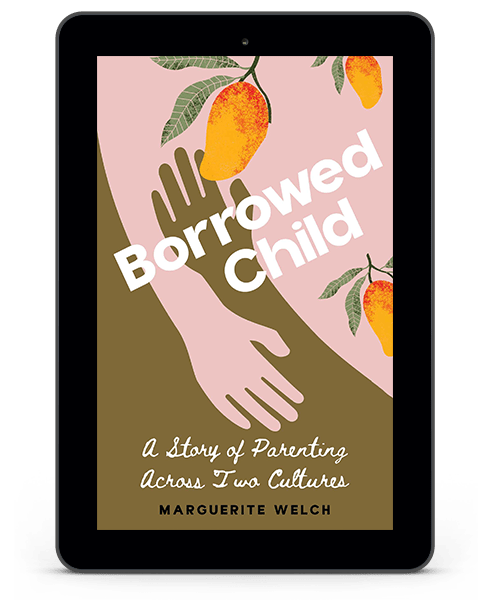
Contemporary Drama Spotlight: Borrowed Child by Marguerite Welch

 Today, we have an engaging multicultural contemporary drama to share! Learn about Borrowed Child: A Story of Parenting Across Two Cultures and author Marguerite Welch. Be sure to enter for a chance to win a prize in the book tour giveaway at the end of this post. 


A haunting and suspenseful cautionary tale, Borrowed Child is about what happens when a well-meaning inclination toward “salvation” goes awry.

Borrowed Child:

A Story of Parenting Across Two Cultures

by Marguerite Welch

Genre: Multicultural Contemporary Fiction, Drama


Many of our posts contain affiliate links.

Should you purchase an item via our links--we may receive slight compensation from an
affiliate partner.  


about the book

For fans of Little Fires Everywhere, a novel that explores the ambiguities of motherhood and salvation through the anguished relationship between a troubled, undocumented Mexican teenager and the grieving, upper-middle-class mother who takes her in.

After the drug overdose of her teenage son, Helen, a privileged white woman, takes in Mia, a troubled and undocumented Mexican teenager.

Although they initially fill each other’s voids, Helen’s lofty expectations of Mia eventually test that bond and Mia, tortured by guilt and starved for affection, runs off with Diego, an MS13 gang leader. While Helen, bereft over losing another child, tries to reconstruct her life, Mia’s life with Diego spirals into a nightmare: Just after she has his baby, he goes to jail for multiple murders. As each woman moves forward through her own challenges, Helen confronts her deep-seated prejudices, while Mia battles her own demons in search of self-identity and meaning in her life.

A haunting and suspenseful cautionary tale, Borrowed Child is about what happens when a well-meaning inclination toward “salvation” goes awry. 


what readers are saying...


[A] detailed and occasionally heartbreaking portrait that pays special attention to the physical and emotional struggles of a young undocumented immigrant." —Kirkus


“With the grace and complexity of The White Album by Joan Didion, Borrowed Child examines how intention and action, especially for white people, might misinterpret the complexities of race and power in the United States. With gorgeous writing, Welch subverts expectations and gifts us a nuanced view of prejudice.”—Melissa Scholes Young, author of Flood and The Hive


buy the book 


Amazon * B&N * Simon & Schuster * Bookbub * Goodreads


read an excerpt 


CHAPTER 1: HELEN


For more than a week I could not make myself open the door to Mia’s room. When I finally raised the shades, light illuminated the space like a stage set: the rumpled bed, the hot pink lipstick on the dresser, the closet door agape, revealing the outfit I gave her for church. Gray wool slacks dangled awkwardly from a plastic hanger, the silk blouse discarded in a dusty corner along with one dirty sock—all clues, remnants of a life lived on this stage. But was it the beginning of the play or the end?

Mia had just started her senior year in high school. I knew she was intimidated by all the college visits and apprehensive about submitting the applications, but I had convinced myself that she was ready to say goodbye to her old life and start anew. Sure, we’d experienced difficulties and detours, what family doesn’t? But I believed all was resolved; believed, that is, until one random Wednesday in late September when she never came home. No one saw her—not her teachers, the office staff, or her counselor. No one knew where she was.

At first, I thought Mia had gone off with friends and simply forgotten to call. She would have called, wouldn’t she? Maybe she had gone back to her birth mother’s home. But that seemed unlikely. I pulled out my cell phone every few minutes to see if I had missed a text. By 8:00 p.m. I called her mother.

“Maybe she go off with drug dealer boyfriend,” Carmen said in broken English.

What drug dealer boyfriend? I wanted to cry out, but knew it was pointless. I couldn’t understand her rapid-fire Spanish and our adversarial relationship over the years had made meaningful communication impossible. Carmen’s lack of concern for Mia’s welfare had always mystified and infuriated me.

“You no call the police, okay?” Carmen added. It had been my experience that people in the Hispanic community often panicked when they saw a uniform. It wouldn’t do any good to get the police involved and might make it worse.

“Okay, but please call me if you hear anything,” I pleaded.She never called.

I cried on my husband’s shoulder. “How could Mia do this? Something must be very wrong.” Don was upset too, but couldn’t resist giving me that “I-told-you-so” look, patting my hand with a restrained sense of obligation rather than genuine concern, or so I read it at the time. Now I understand how needy and unfair I was. He had always been so loving and supportive no matter how crazy my schemes and passionate my interests, whether he understood them or not.

The saying “opposites attract” could not have been truer in our relationship. He was a man of science. I was a dreamy artistic type. He read Naval Institute Proceedings. I read poetry. He liked spaghetti. I liked sushi. He couldn’t tell a petunia from a daisy. I was a gardener. And yet, life together was better than apart. When our boys came along, he was an involved, loving father who disciplined with love and loved unrestrainedly. But, at that moment, if I could have gotten beyond my own conflicted feelings of hurt and worry, I could have seen by the way his hand shook as he picked up his Maker’s Mark on the rocks and took a couple of quick gulps that he was genuinely concerned about Mia’s absence.

It was too hard. Both of us felt the stab of an old, only partially healed wound, for which Mia had been a temporary anesthetic. Don banged his drink down on the table, half surprised by the noise, and hugged me silently, afraid to say a word, one pain masking another. An image swam to the surface: Sammy’s grin and tousled mop of blond hair. How could we have been so unaware of the troubled waters beneath that sunny smile? The dark, anxious place that became his secret home beyond our reach and knowing. Now, clueless again, we had let another child slip through the cracks and I was left clutching her abandoned lipstick until my palm bled.


about the author 


Marguerite Welch is a writer, artist, photographer and sailor whose essays and reviews on fine art photography have been published in the NEW ART EXAMINER, WASHINGTON REVIEW OF THE ARTS, AFTERIMAGE and other local and national art publications. Short personal essays and travel pieces have appeared in BAY WEEKLY, WANDERLUST and CHESAPEAKE BAY MAGAZINE. Her travel memoir, WATERBORNE: A SLOW TRIP AROUND A SMALL PLANET, published by Seaworthy Publications in September 2019, documents a 14-year world circumnavigation undertaken with her husband in their 38-foot sailboat Ithaca. In her spare time she tends her garden on the banks of the Severn River in Annapolis, Maryland where she and her husband have lived for 40 years.


connect with the author  

Website * Facebook * Instagram * Amazon * Goodreads


enter the giveaway

Follow the tour HERE for special content and a giveaway!


Enter the Borrowed Child Giveaway Here


Monday, December 29, 2025

Contemporary Fiction Spotlight: The Legacy of a Lie by Ron Elcombe

Today, I have a contemporary fiction novel to share in our book teaser spotlight! Take a minute and learn about The Legacy of a Lie and author Ron Elcombe--and be sure to enter for a chance to win a prize in the book tour giveaway at the end of this post! 


Contemporary Fiction

Date Published: January 15, 2026

Publisher: Windy Ridge Publishing


Many of our posts contain affiliate links.

Should you purchase an item via our links--we may receive slight compensation from an
affiliate partner. 


About the Book

 
The Legacy of a Lie unravels a web of family secrets when the past resurfaces, threatening everything its keepers tried to protect. At its center is Maarit McDonough Malone, a brilliant yet flawed budding opera singer whose scandalous choices ripple across generations.
 

Her daughters—Kay, a celebrated mezzo-soprano, and Anna, a self-doubting composer—must confront the emotional fallout of their mother’s long-buried lies. Alongside them are a young, truth-seeking journalist, a lawyer, and a priest, all carrying the weight of secrets they are professionally and morally bound to keep. 


Set in the haunting beauty of Minnesota’s river bluffs and Lake Superior’s North Shore, this is a story of legacy and redemption—of truth breaking through the cracks of deception and healing in the wake of generations of silence.


Read an Excerpt


She turned the radio off as she pulled into the drive-through at the Coffee Stop. The attendant, too perky for the morning hour, wished her a great day and passed a medium coffee with cream but no sugar through the window. Only two meetings were scheduled for the day: the first with her boss at 11:00 a.m. and a division meeting at 1:00. With any luck, she’d escape the office early. 


Instead of turning north to I–94 and Saint Paul, the car pulled out of the Coffee-Stop driveway onto the main street and turned south toward Red Wing. Maarit was surprised at the easy merge into the lighter-than-usual highway traffic. 


“Why is the sun in my eyes today?” Maarit muttered. “It wasn’t yesterday.” Within a few minutes, where she expected stop lights, stop signs were spaced apart at irregular intervals. Long stretches of unfamiliar road stretched to the horizon. She looked at her watch and frowned. She should have been at work twenty minutes ago. The highway transitioned into a street with no curb or shoulder, then evolved into a narrow gravel road. She tried to turn around, but the car slid off the narrow shoulder into a ditch. 


Confusion became fear. The front bumper hit an orange snow fence. The car shuddered. Forward motion ceased. Engine warning lights glowed red throughout the vehicle. Fear became panic. She tried to yell for help, but only a faint whisper escaped her lips. Her head throbbed. Everything blurred. Then, everything went dark as she lost consciousness.


About the Author


 Ron Elcombe is a professor emeritus at Winona State University (MN), where he taught various advertising and mass communication courses for 25 years. His eclectic career encompasses teaching instrumental music, as well as sales and marketing roles for multiple companies. He has been published in the Lake Country Journal and several professional academic journals and has attended seminars on fiction writing at the Iowa Summer Writers Festival. "The Legacy of a Lie" is the first book in a three-novel series. He resides in Rochester, Minnesota, with his wife, Sharon, and enjoys summers on the golf course and at the family cabin in northern Minnesota.


Connect with the Author

Website

Facebook

Instagram


Buy the Book

BookBaby


Enter the Giveaway 


RABT Book Tours & PR

Thursday, April 17, 2025

Contemporary Fiction Book Blitz Spotlight: The Pot of Gold at the Rainbow Cafe by Dan Chabot

Immerse yourself in the heartwarming world of Dan Chabot's latest contemporary fiction novel, where the power of human connection takes center stage. Check out The Pot of Gold at the Rainbow Cafe and learn about the author!


Contemporary Fiction

Date Published: April 1, 2025


Many of our posts contain affiliate links.

Should you purchase an item via our links--we may receive slight compensation from an
affiliate partner. 


About the Book


In a time when too much emphasis is on our past sins, instead of our many celebrated successes, The Pot of Gold at the Rainbow Café is a breath of fresh air. It's a story that looks at what’s right with America, its big heart, and its kind and generous people. It is an inspiring, touching, humorous story about main-street America, still the land of opportunity and exceptionalism, where fairy-tale endings are still common. It’s a place where neighbors look out for each other, help each other, then pay it forward, pass their good fortune along. Just look around you. It still happens every day.


About the Author


Dan Chabot is a retired newspaper editor and columnist for a major metro daily, the Milwaukee Journal (now the Journal-Sentinel). For many years he presided over the paper’s most popular section, the Green Sheet, a daily compendium of entertaining feature stories, nostalgia, history, humor and whimsy. He is the author of several other novels and now lives in Florida.


Connect with the Author

Facebook

BookBuzz


Buy the Book

Amazon


RABT Book Tours & PR

Wednesday, March 30, 2022

Phoenix Force: The Prequel Book Blitz

This morning, I have a military ops novel in our book blitz spotlight!  Check out The Prequel, book one from The Phoenix Force series, learn about the series and author Susan Horsnell!


The Phoenix Force Series Book 1

Covert Ops/Special Ops/Former Military

Date Published: 28 January 2022


photo add-to-goodreads-button_zpsc7b3c634.png


Many of our posts contain affiliate links.
Should you purchase an item via our links--we may receive slight compensation from an
affiliate partner.  


About the Book


THE SERIES:

This Special Ops Force Series has one big difference…

The members are ALL kickass females.

They each have a reason to seek vengeance.

They will cut through the frustration of red tape.

Together, they will deal out justice for the victims and find it for themselves.

Together, they are PHOENIX FORCE.

This is the first book in the series introducing the team.

12 Books

11 Authors

An all-female special ops team.

Ladies who will rise from the ashes of their pasts to right a few wrongs.

Start at the beginning...

Meet the characters, who together, form a formidable team known as PHOENIX FORCE.


About the Author

USA Today Bestselling Author and International Best Selling Author - Susan Horsnell writes in many sub-genres of romance, sweet and steamy, under her own name and two pen names-Susan R. Horsnell (Steamy Romance Only) and Bestselling Author - Olivia Ellen Turner (LGBTQ+ Romance).

Strong social themes are a feature and her experiences as a nurse and Naval wife play a big part in many stories.

She grew up in Manly, NSW, Australia and has travelled Australia and the World on postings with her Naval Officer husband of 47 years.

She lives with her husband, and fur baby – Gemma-Jean, a one-year-old Jack Russell Terrier, in a small village in the mountains in Queensland, Australia.

Since retiring a nursing career of 37 years, she has been able to indulge her passion for writing.

The family enjoys travelling the country with their RV when not at home renovating.


Connect with the Author

Blog

Website

Bookbub

Newsletter

Pinterest

LinkedIn

Twitter

Instagram

Goodreads

Amazon Author Page


Buy the Book

AMAZON US

AMAZON UK

AMAZON AU

AMAZON CA

RABT Book Tours & PR