Showing posts with label Weekly Feature. Show all posts

Sunday, August 2, 2026

Last Week in Books at Book Corner News & Reviews (Week Ending August 1)

Every week brings a new collection of stories to Book Corner News & Reviews, and this one was no exception. Over the past several days we've featured everything from atmospheric mysteries and historical adventures to epic fantasy, inspirational fiction, science fiction, and romance. If you missed any of this week's spotlights, blitzes, release celebrations, or teasers, here's a quick look at the books that filled our pages.


Illusionist by Laurie Buchanan

Genre: Mystery / Crime Thriller


A secluded writers' retreat, a missing owner, and an impossible demand from a crime boss set the stage for a mystery that steadily builds the suspense. If you're in the mood for a story filled with secrets, unexpected twists, and ordinary people facing impossible choices, this one is worth a closer look.


The Belgravia Phantom by Ellis Blackwood

Genre: Historical Mystery


Victorian London is always a wonderful setting for a mystery, and *The Belgravia Phantom* looks like it makes the most of it. Between the atmospheric setting, intriguing characters, and long-buried secrets, this feels like the kind of book that's perfect for curling up with on a quiet weekend.

 
🪶 Read the full feature


Kill Code by Clive Fleury

Genre: Techno Thriller


If fast-paced thrillers with a modern edge are more your style, *Kill Code* deserves a spot on your radar. Combining technology, espionage, and high-stakes suspense, it looks like the kind of story that keeps the pages turning well past bedtime.

🪶Read the full feature


Egyptian Lovers

Genre:Dark Paranormal Romance


Looking for something a little outside the usual romance? *Egyptian Lovers* blends ancient mythology with supernatural intrigue, creating a darker love story filled with mystery, danger, and plenty of atmosphere.

🪶Read the full feature


A Deadly Inferno Consumes by Sophie Barnes

Genre: Historical Romance


Sophie Barnes has a knack for weaving romance into fascinating moments from history, and this latest release is no exception. If you enjoy historical settings where love and danger go hand in hand, this is one to add to your TBR.
 

🪶Read the full feature


Rathuun: King of the Prairie by David Fitz-Gerald

Genre: Epic Fantasy


Every fantasy fan loves discovering a new world to explore, and *Rathuun: King of the Prairie* promises an epic adventure filled with memorable characters and imaginative storytelling. If you're ready to start a new fantasy series, this could be a great place to begin.


Only Angels Have Blue Eyes by J. Todd Kingrea

Genre: Adventure / Suspense


Action, suspense, and heartfelt storytelling come together in what looks like an exciting adventure. Readers who enjoy books with danger, strong characters, and plenty of twists may want to take a closer look at this one.


Strings by Jan Merritt

Genre: Contemporary Fiction


Not every memorable book relies on nonstop action. *Strings* appears to focus on the relationships and life choices that shape us, making it a thoughtful pick for readers who enjoy character-driven stories with emotional depth.


Uprising by J. E. Rizzo

Genre: Science Fiction


Science fiction readers looking for action, conflict, and big ideas may want to keep *Uprising* on their watch list. It promises an exciting blend of futuristic adventure and thought-provoking storytelling that's perfect for fans of the genre.


Sacred Salvation by Casia Pickering

Genre: Inspirational Fiction / Christian Fiction


For readers who enjoy stories centered on faith, hope, and second chances, *Sacred Salvation* offers an uplifting journey through life's challenges. It's the kind of novel that reminds us how resilience, grace, and compassion can help light the way forward.


★ My Pick of the Week


The Belgravia Phantom by Ellis Blackwood


I love historical mysteries, so The Belgravia Phantom immediately caught my attention. Between its Victorian setting, intriguing premise, and classic mystery feel, it seems like the perfect book to settle in with as summer begins to wind down. If I could only choose one featured title from this week's roundup, this would be my pick.

Until Next Week...

One of my favorite things about putting together these weekly roundups is seeing the incredible variety of stories that arrive at Book Corner News & Reviews. Every week introduces new authors, new worlds, and new adventures waiting to be discovered, and it's always exciting to share them with fellow readers.

Whether you're searching for an atmospheric mystery, a sweeping fantasy, a heartfelt romance, or an inspiring story of hope, I hope one-or maybe even a few-of this week's featured books found their way onto your reading list.
 
Which title caught your eye this week? 
 
I'd love to hear your thoughts in the comments, and I'll be back next weekend with another roundup of new releases, spotlights, and featured reads!
 
 
Never Miss a Giveaway!

Check out our Giveaway page for the latest book tour giveaways! 


Sign up for our Weekly Newsletter!

Be the first to see cover reveals, upcoming releases, exclusive excerpts, author features, and more. Join our growing community of readers and book lovers.

➡️ Join our Newsletter


Monday, July 13, 2026

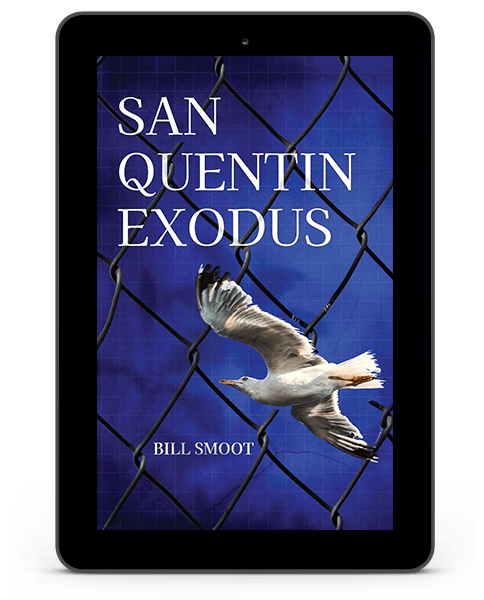
Crime Drama Spotlight: San Quentin Exodus by Bill Smoot

This morning, I have a historical literary fiction / crime drama novel to share in our featured book spotlight! Learn about San Quentin Exodus and author Bill Smoot--and be sure to enter for a chance to enter the book tour giveaway at the end of this post!


What happens when a literature teacher channels her inner Nancy Drew to break an inmate out of America’s most famous prison?

San Quentin Exodus

by Bill Smoot

Genre: Historical Literary Fiction, Crime Drama


Many of our posts contain affiliate links.

Should you purchase an item via our links--we may receive slight compensation from an
affiliate partner.  


about the book

James, a still-water-runs-deep boy, struggles to navigate the rough streets of Oakland, California, in the 80s. His only friend is a pit bull he rescues from dog fighting. On the cusp of college, James commits a crime that results in a prison term of thirty to life. 


Allison, a young Indiana girl obsessed with Nancy Drew novels, vows that her life’s mission will be to solve mysteries and help people. Introverted yet daring, Allison moves to Berkeley to teach prep school and volunteers as a tutor at San Quentin. She meets James when he is approaching fifty, learns his story, and after his parole denial, channels Nancy Drew to plan his improbable escape. 


San Quentin Exodux is a braided novel about two people whose lives cross in a quest to reset an ill-fated life. It is a story infused with misfortune and pain, but also with hope and a fierce humanity.


“San Quentin Exodus, Bill Smoot’s deeply compelling novel, introduces readers to the world of prison but really to the much bigger world of his characters’ lives, inviting us to follow the trajectory of each as it unfolds with surprise and mystery, love and loss. Like all good literature, San Quentin Exodus ultimately asks us to reconsider everything we believe—or think we believe. Smoot is the consummate storyteller: restrained, wise, compassionate.”
Lori Ostlund, author of Are You Happy?


buy the book


Amazon * Apple * B&N * Bookbub * Goodreads


read an excerpt

Prologue


Wings

In one week Allison Anderson will commit her first felony: section 4550 of the California Penal Code, helping someone escape from a state prison. Almost everyone who knows her would be stunned with disbelief. For her, it’s the ultimate realization of who she is.

One autumn evening six years ago, Allison entered San Quentin Prison as a volunteer tutor. Walking across the prison grounds, she gazed at the forty-foot walls, the spirals of razor-

wire, and the imposing guard towers. She wondered how an inmate might escape. It was her first time in a prison, and the question engaged her problem-solving mind. She did not know

that one day she would devise an escape plan. She did not know that she would put that plan into action. At the time, it was just a thought experiment, a challenge for a woman whose childhood heroine was Nancy Drew, girl sleuth.

Allison’s most vivid memory of entering the prison that evening was the birds. When she and her group rounded the hospital building and walked across the yard, she saw geese and gulls scratching the ground on the baseball field. It was mere minutes before the October sun would set, and their white feathers glowed like gold. A single goose stretched his neck, dipped his thick body, and with a push from his feet and a flapping of his great wings, he rose from the ground and glided across the field, then soared over the wall. Other geese did the same, their necks piercing the air like arrows. Sea gulls followed. The walls and guard towers were mere landmarks below them, like trees or outcroppings of rock, obstacles they cleared with ease. They didn’t need an escape plan. They had wings.


The First Day and the Last

They say that the two days of prison an inmate remembers most vividly are his first and his last. Everything in between is a blur. James’ first day was 30 years ago. His last—maybe—will be in one week. If Hemingway’s character could walk away from war, James can declare his separate peace from prison. It’s time to move on, regardless of what the parole board has ruled. It’s necessary. An absolute must.

For society, James is a statistic, another Black man languishing in prison, costing the state $75,000 a year. His escape—if it succeeds—will save taxpayers money. For himself, it will be his personal exodus, his promised land of another chance at life. If things go according to plan, no one will know how he did it. He will just disappear, a man become a ghost. Allison is a smart young lady, and he can’t find any flaws in her plan, but he is haunted by that old saying: If it seems too good to be true, then it probably is.

James is filled with yearning and fear. The greater danger is not that he’ll get caught and have time added to his sentence—though that’s a real possibility—but that the hope he’s allowed himself to feel will die. That’s the greater risk. The loss of hope he could not bear.

He lies in his bunk, trying to conjure up positive images. The thought of freedom makes his skin prickle. The shadows of the bars cross his body, spill onto the concrete floor. He listens to the cell block tick with sound, as if the walls are straining to breathe. He imagines a sea gull soaring on the wind.


about the author


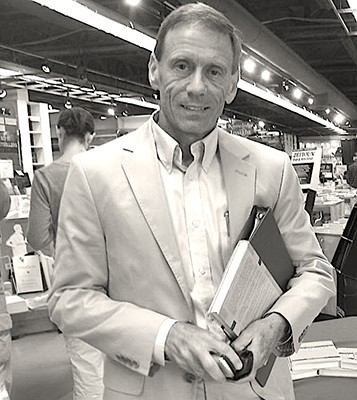
Bill Smoot grew up in Maysville, Kentucky, and attended Purdue University where he was editor of the campus newspaper, The Purdue Exponent. Fired as editor by the university president, he was reinstated after protest from students and faculty. He went on to graduate school at Northwestern University, where he received a PhD in philosophy. He has taught for four decades at levels ranging from sixth grade to university students. He currently teaches courses at Mount Tamalpais College at San Quentin and the Osher Institute for Lifelong Learning at UC-Berkeley. 


His essays and short stories have such publications as Ninth Letter, Crab Creek Review. The Nation, Literary Review, Crab Orchard Review, Western Humanities Review, Narrative, and Salon.com. His the author of Conversations with Great Teachers and a novel, Love: A Story. Mr. Smoot currently lives in Berkeley, California, with his dog Artemis. 


connect with the author 

Website * Facebook * Instagram * Bluesky * Bookbub * Amazon * Goodreads


enter the giveaway

Follow the tour HERE for special content and a giveaway!


Enter the San Quentin Exodus Giveaway Here


Wednesday, July 8, 2026

Nautical Fiction Spotlight: Perilous Shores by Thomas M. Wing

This morning, I have a nautical-themed historical fiction novel in our book spotlight! Learn about Perilous Shores from the The Sea Hawkes Chronicles and author Thomas M. Wing. Be sure to enter for a chance to win a prize in the book tour giveaway at the end of this post.  


Book 2 of The Sea Hawkes Chronicles

Historical Fiction/Nautical Fiction

Date Published: June 23, 2026

Publisher: Acorn Publishing


Many of our posts contain affiliate links.

Should you purchase an item via our links--we may receive slight compensation from an
affiliate partner.  


about the book

 
Vengeance is as dangerous to a cause as to the enemy.
 

The murder of his wife at the hands of British soldiers prompts American privateer Captain Jonas Hawke’s vow to make Britain pay. 


A grief-stricken Jonas strikes deep into the heart of the enemy, driven by his personal vendetta. When he raids a port city, one of his men crosses an unthinkable line, which forces Jonas to come to terms with the anguish that distorts his definition of justice. 


Concerned his wrath will bring irreparable harm to the cause for America’s freedom, Jonas grapples with his role as a warrior and as a man. When he learns the Royal Navy is hunting his ship, he fears his deadly decisions may have cost him and his crew everything. It’s too late to turn back. Instead, he must continue on and face the inevitable perils of war. 


Perilous Shores is a gripping, action-packed, and historically authentic tale of revenge, survival, and one man’s relentless pursuit of his country’s independence.


about the author


Thomas M. Wing, a Naval Academy and Naval War College graduate, retired after thirty-two years as a Navy Surface Warfare officer. A dedicated sailor for half a century, he created the Continental Navy Foundation, served as its executive director, and commanded its brigantine, Megan D.
 

Tom’s first novel, Against All Enemies, earned gold medals from the Military Writers Society of America and Literary Titan. In Harm’s Way, the first in the Sea Hawkes Chronicles series has also garnered several awards. 


He resides in Brooklyn, New York, with his wife and daughter and a cat and a dog. Whatever free time he has is still spent on the water. 


For more about the author and to follow his blog about nautical and naval trivia, visit his website.


connect with the author

Website

Facebook

Twitter

Goodreads

Instagram


buy the book

Amazon

B&N

Apple Books

Buy the 2 Book Series on Amazon! 


enter the giveaway 


RABT Book Tours & PR

Tuesday, June 30, 2026

What Every Writer Should Know About Editing and Proofreading

You finally did it. After weeks, months, or maybe even years of writing, you've typed the words "The End." It's an exciting moment, and you deserve to celebrate it. But before your manuscript makes its way into readers' hands, there's one more important journey ahead: polishing your work.


Understanding the difference between editing and proofreading is one of the most important parts of preparing a manuscript for publication. Although the terms are often used interchangeably, they serve very different purposes. 


editing a manuscript

One of the most common questions new writers ask is, "Do I need editing or proofreading?" It's a fair question because the two terms are often used interchangeably. While both are essential parts of preparing a manuscript for publication, they do serve different purposes. If you know the difference, you can make smarter decisions about your writing, avoid unnecessary expenses, and produce a book that readers will enjoy from the first page to the last.


Whether you're self-publishing, submitting to a traditional publisher, or just wanting your manuscript to be the best it can be--understanding the editing process is a very valuable skill to learn.


What Is the Difference Between Editing and Proofreading?


The easiest way to think about editing and proofreading is to compare them to renovating a home.


Editing is the remodeling stage. You're improving the layout, fixing structural problems, replacing outdated features, and making everything work together more effectively.


Proofreading is the final walkthrough before the house goes on the market. You're checking for paint drips, crooked light switches, and small details that could leave a poor impression.


Both stages improve the final product, but they happen at different times and focus on different goals.


What Is Editing?


Editing is the process of improving your manuscript before it's ready for publication. An editor looks beyond grammar and spelling to evaluate how well your story or message works as a whole.


Depending on the type of editing you choose, an editor may help you strengthen your plot, improve character development, tighten pacing, eliminate inconsistencies, refine dialogue, and make your writing more engaging. They also look for repetitive wording, awkward sentences, and places where readers might become confused or lose interest.


Think of editing as a team collaboration. A good editor isn't trying to rewrite your story—they're helping your voice shine while making the reading experience smoother and more enjoyable.


Types of editing include:

• Developmental editing for writing structure.

• Line editing for tone and readability.

• Copy editing for grammar, punctuation, spelling, and factual errors or inconsistencies.


Each level of editing plays an important role, and not every manuscript requires every service. The key is understanding where your book is in the writing process.


What Is Proofreading?


Proofreading is the final review before publication. By this stage, your manuscript should already be edited, revised, and formatted.


Instead of making major changes, a proofreader looks for the small mistakes that inevitably slip through after multiple rounds of revisions.


A proofreader's job is to catch the small errors that are easy to overlook, including:

  • Typos and spelling mistakes
  • Missing words or awkward sentence omissions
  • Problems with punctuation, capitalization, or grammar
  • Inconsistent spacing between lines or characters
  • Formatting inconsistencies
  • Missing or incorrect page numbers


These details may seem minor to the overall novel, but they can really interrupt the reader's experience and even affect your credibility as an author.


Why Editing Should Always Come Before Proofreading


It's tempting to want everything cleaned up as quickly as possible, but proofreading too early often means doing the same work twice.


Imagine paying someone to correct every typo in Chapter Five, only to remove that chapter completely after an editor suggests a better structure for your story.


Editing is where the big changes happen to your book after your first draft. Chapters may be rewritten, scenes moved, character dialogue expanded or cropped, or entire sections removed. Once those editing revisions are complete, proofreading provides the final polish before publication.


Following the proper order saves both time and money.


Editing vs. Proofreading: A Quick Comparison


If you're still revising your story, developing characters, or restructuring chapters, editing is the service you need.


If your manuscript is complete and you're preparing to publish, proofreading is the final step to help ensure readers see your best work.


Editing improves the content.


Proofreading perfects the presentation.


Both are equally important.


Can You Edit Your Own Book?


Every writer should learn basic self-editing skills. In fact, the more polished your manuscript is before you hire an editor, the more value you'll receive from professional editing.


Before sending your manuscript to an editor, there are some things you can do:

  • Take a break from your manuscript for at least a week. Fresh eyes notice problems you've become blind to during the writing process. 
  • Read your work aloud. Hearing your sentences often reveals awkward dialogue, repeated words, and pacing issues that are easy to miss when reading silently. 
  • Change how you read your manuscript. Print it out or view it on an e-reader or tablet. A different format can help you notice mistakes that disappear on your computer screen.
  • Search for words you are overusing in your writing. Many authors rely too heavily on words like "just," "really," "very," "that," or "suddenly." Identifying these habits can make your writing stronger.
  • Embrace the value of using beta readers for early book feedback. Honest feedback from these trusted early readers can help identify confusing scenes that fail to flow well or inconsistencies in character behaviors before your professional editing begins. 


Helpful Editing Tools for Writers


Technology has become an excellent writing companion, although it shouldn't replace a human editor.


Several tools can help improve your manuscript before you invest in professional editing.


Grammarly offers suggestions on grammar, spelling, punctuation, and clarity that are especially useful during self-editing.


ProWritingAid provides detailed reports on readability, repeated words, pacing, dialogue, and writing style, making it a favorite among novelists.


Hemingway Editor highlights overly complex sentences and encourages clearer, more concise writing.


Microsoft Word Editor and Google Docs also include built-in grammar and spelling tools that can catch many common mistakes.


These programs are incredibly useful for polishing a draft, but they can't judge emotional impact, character development, storytelling, or whether your ending delivers a satisfying conclusion.


Common Myths About Editing and Proofreading


One of the biggest myths for writers is that a good spell checker is all you need. While modern software catches many simple errors, it won't recognize when you've used the wrong word in the right spelling or notice that a character's name spelling changed halfway through your novel.


Hiring an editor doesn't eliminate the need for final proofreading. Fresh proofreader eyes almost always catch a few missed, minor errors or flaws--even after the pros.


Some writers also believe that asking for editing is a sign of weakness. Nothing could be further from the truth. Every traditionally published book has been edited, often multiple times. Working with an editor isn't about fixing bad writing—it's about making good writing even better.


Choosing the Right Service for Your Manuscript


If you're unsure whether you are ready for editing or proofreading, ask yourself one simple question:

"Am I still changing the story?"


If the answer is yes, editing should come first.


If the story is finished, professionally edited, and you're preparing to publish, proofreading is the next logical step.


Knowing where you are in the process helps you invest your time and budget wisely.


Book Corner Takeaway


Writing a book is such an incredible achievement! But, creating a book that readers remember takes more than just finishing the first draft. It requires patience, revision, and a willingness to improve your work.


Remember, editing and proofreading aren't competing for the same role. The two are partners--collaborating in producing your professional manuscript. Editing strengthens your story structure and flow, while proofreading provides the final polish for the reader.


Whether you're publishing your first novel or your fifth, giving your manuscript the attention it deserves is one of the best investments you can make. Your readers may never notice great editing or flawless proofreading, and that's exactly the goal. They'll become immersed in your story, turning pages instead of spotting mistakes.


After all, that's what every writer hopes for.


Cozy Mystery Release Blitz: Death and the Social Climber by Winnie Simpson

I love finding new cozy mysteries to share! Today, I have Death and the Social Climber in book release spotlight! Learn about the novel, the Ann Audrey mystery series, and author Winnie Simpson--and don't forget to enter for a chance to win a prize in the book tour giveaway at the end of this post! 


Ann Audrey Mystery, Book 2


Cozy Mystery / Mystery & Detective

Date Published: 06-30-2026

Publisher: Mission Point Press

Many of our posts contain affiliate links.

Should you purchase an item via our links--we may receive slight compensation from an
affiliate partner.  


about the book


Murder Is the Ultimate Power Move


When a beautiful Atlanta woman is widowed twice under suspicious circumstances, Ann Audrey Pickering finds herself drawn—once again—into someone else’s trouble.
 

A former lawyer who once helped the FBI convict her own husband for fraud, Ann Audrey has settled into a reclusive life, until her longtime friend Flynn Reynolds asks for help. His elderly aunts are convinced that another nephew was murdered by his wife, Kathryn, whose second husband is now also dead. Ann Audrey is skeptical. Still, she owes Flynn, and there are some odd questions. Complicating matters is Kathryn’s latest mother-in-law, a woman who rose from an impoverished background into Atlanta’s upper circles and recognizes a kindred spirit in her dead son’s ambitious widow. She doesn’t believe Kathryn is a murderer—but she has heard rumors, and she wants them stopped. 


Set in Atlanta in January 2000, as the city buzzes with anticipation for the upcoming Super Bowl, Ann Audrey searches for the black widow through the city’s frenetic bar scene, private clubs, high-rise offices, and beloved local institutions like Mary Mac’s Tea Room and The Varsity. With help from Flynn and her friend Theo, along with the return of sexy detective Mike Bristol, she pieces together a twisting story of social climbing, carefully managed appearances, marriage, and murder. As the Super Bowl kickoff draws near, the case reaches a climax when an ice storm shuts down Atlanta’s roads and power, leaving secrets and murderers with nowhere to hide. 


buy the book

Amazon

 Check out Whipped Cream and Piano Wire (Book 1 of the Ann Audrey Mysteries)


about the author


 Following her mother’s lead, Mississippi native Winnie Simpson was an avid murder mystery reader beginning in the third grade, starting with Nancy Drew and moving through the classics of British, American, and international crime. Winnie studied music at Duke University, later receiving an MFA in Music at SUNY Buffalo, where she worked as an arts administrator before throwing it all over in order to make a decent living. After finishing law school at Emory University, she became a partner in a large firm in Atlanta where her practice focused mainly on securities litigation. Retiring early, Winnie relocated to Northern Michigan where she lives in a renovated nineteenth-century building that served as a former Michigan state asylum. For more than a decade, she has taken writing classes and participated in writing groups. She is fond of opera, hiking, cycling, and Duke basketball, most seasons.


connect with the author

Website

Goodreads

Facebook

Instagram


enter the giveaway 


RABT Book Tours & PR